About Us
Creative Energy
decarbonizes buildings
through community energy
Creative Energy is a North American leader in sustainable district energy. We develop, own and operate community-scale energy systems, partnering with cities, institutions, and developers to deliver low‑carbon solutions that support resilient growth and long-term climate goals. With over 56 years of experience, we own and operate one of Canada’s largest thermal energy networks in downtown Vancouver, achieving 99.99% reliability. We are advancing a portfolio of customized district energy systems across British Columbia, Ontario, and Washington State using technological excellence and innovative technologies that deliver measurable environmental and economic value.
Our district energy solutions removes the need for boiler rooms, chiller rooms, cooling towers, and associated shafts within the buildings, allowing building owners to gain full value of their real estate.
Providing long term energy security which is at or below market costs, reducing strata reserve funds and operating costs by removing thermal generation assets from within buildings.
By leveraging the economies of scales of a district system, we can implement low-carbon technical solutions that are not economical at the building scale.
Helping building developers and owners to remove the cost of boilers, chillers, and cooling towers from the building’s construction budget.
Creating partnerships and engaging stakeholders to ensure success
How Do We Do It
01
We find creative ways to tap into heat resources that would otherwise be unused. We match these unexpected sources of heat to heat the needs of the community.
02
We do this via economies of scale and we provide an industry-leading economically viable way to decarbonize with our financial capabilities and long-term approach.
03
Ultimately, we create renewable energy solutions.
Our History
Serving District energy needs for over 55 years, Creative Energy’s value proposition is based on a foundation of service reliability, exceptional customer service and continued growth.

BC’s first district energy company
Vancouver faced huge problems from the pollution and inefficiencies involved in heating buildings using fuel-oil and coal. Their solution was Central Heat Distribution

Central Heat used highly efficient gas boilers to produce steam that was distributed to individual buildings through a network of underground pipes, converting the Vancouver Press building to a centralized natural gas steam boiler plant.

Significantly improving local air quality through the removal of 600 individual boiler stacks, Central Heat established itself as an integral part of the community.

CBC Vancouver connects into the Downtown Vancouver heating network.
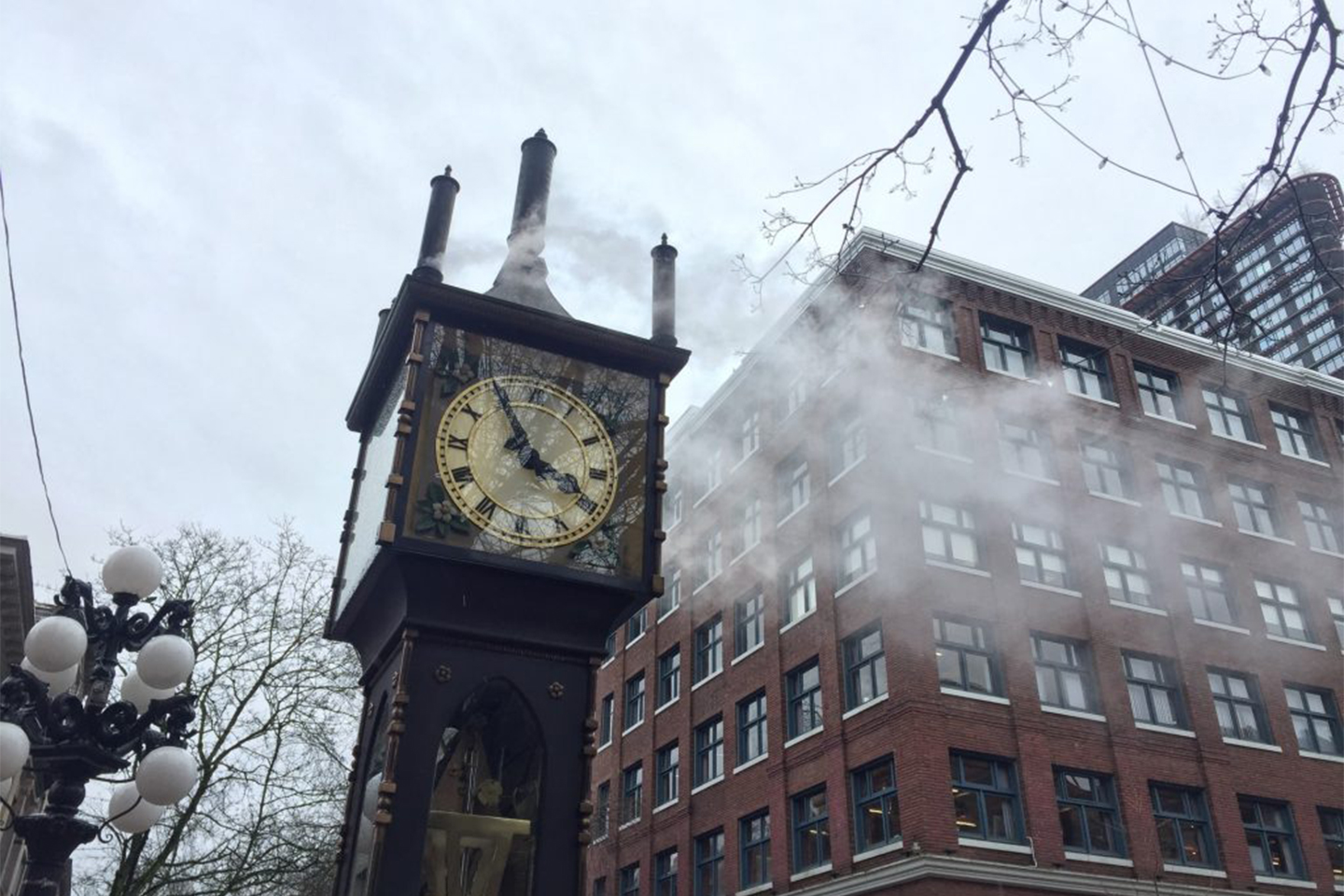
Vancouver’s landmark Gastown Steam Clock is built and powered by our system. Today, the clock is powered by electricity, but the whistle remains powered by Creative Energy’s central steam plant.

The Vancouver energy system connects to St. Paul’s Hospital. Everyday, staff, patients and their families depend on our system’s reliability.

The central Vancouver steam system begins to serve Expo Plaza, heating the site of the 1986 World Expo.

The Vancouver energy system provides heat for BC Place, a 50,000-seat multi-purpose stadium, and an official emergency centre during a seismic event or other disaster; a testament to the resilience of our system.

The system also connects to two more Vancouver landmarks, the Vancouver Public Library’s Central Branch and Rogers Arena, home to the Vancouver Canucks.

Rogers Arena

The Vancouver steam system expands to the Woodward’s redevelopment and to the Vancouver Convention Centre.

Vancouver Convention Centre

New Name, Same Energy: Central Heat rebrands as Creative Energy, which serves 205+ buildings in Vancouver’s downtown core, including landmarks like BC Place, Rogers Arena, and Robson Square Library.

A new office for Creative Energy is established in Toronto.

Construction begins on Mirvish Village in Toronto, Ontario- where a combined heat-and-power district energy system provides peak demand electricity to the Honest Ed’s redevelopment.

Construction is completed on our innovative ocean-exchange heating and cooling system for the Sewell’s Marina Redevelopment at Horseshoe Bay.

Creative Energy announces its first project in the United States, working with Seattle hospital, Swedish First Hill, to decarbonize their health campus and creating a thermal network that can serve the surrounding community.

Construction starts on Creative Energy’s low-carbon geoexchange system at the Oakridge Park redevelopment project – one of the largest geoexchange projects in Canada.

North Oak Community Energy System: Kickstarting construction of one of the first geoexchange community energy systems to the Greater Toronto Area, which will decarbonize heating and cooling for North Oak, a thriving Oakville neighbourhood.

Creative Energy announces its partnership with Thompson Rivers University in Kamloops to develop a low-carbon heating system for it’s existing campus, as well as for future developments for the campus.

Construction begins at the North Oak development in Oakville- the first community geo-exchange system in Ontario, a system being developed by Creative Energy in partnership with Minto.

Sen̓áḵw District Energy System- Creative Energy announces partnership with the Squamish Nation to develop a sewer heat recovery district energy system at the Sen̓áḵw development, one of the world’s first large-scale net-zero housing projects.

Groundbreaking for the Decarbonization Project commences in the heart of Vancouver, right next to BC Place.

Creative Energy announces its continued expansion into the US, with the opening of our new office in Seattle.

Construction Commences for Vancouver Decarbonization Project- The crane is installed, assembled, and is now fully operational. This significant milestone marks excavation completion and the start of construction, driving the project forward.

Groundbreaking Ceremony at TRU for LCDES- Partnering to achieve a significant milestone, a step forward in the journey to achieve a zero-carbon campus by 2030.